Fall 2026 — Math 123 @ Tufts University
Course Description
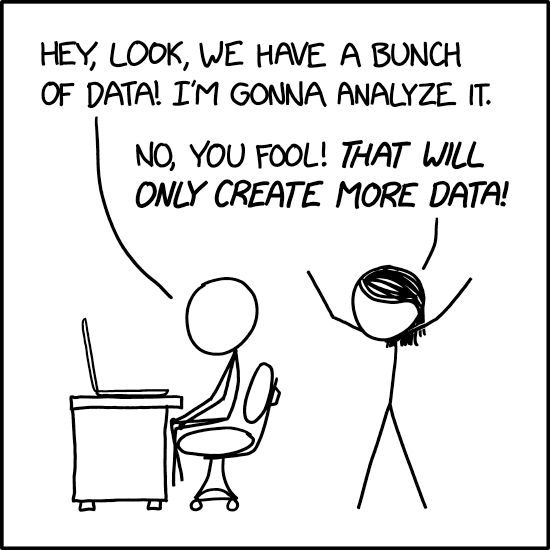
- Instructor: Abhijit Chowdhary
- Email: abhijit.chowdhary@tufts.edu
- Syllabus: Here, but the website will be the default reference.
- Schedule: Tuesday and Thursday, 9:00 AM - 10:15 AM, Braker Hall Room 222
- Office Hours: Mon. 10:30 AM–12:00 PM and Wed. 12:00–1:30 PM, in JCC 520J.
- Prerequisites: Linear Algebra and Multivariable Calculus. Programming and probability experience is helpful, but not required.
This site accompanies the course Mathematical Aspects of Data Analysis, taught as Math 123 at Tufts University.
Data science draws on statistics, computer science, signal processing, and domain knowledge, but most of its foundational questions are inherently mathematical. In this course, we aim to arm the student with the mathematical foundations necessary to confidently navigate future studies and work in the field. That is, we want to understand why methods work, how they fail, and how to reason about new ones.
The state of the art in computational science is moving at, what feels like, light-speed. A career here will always involve learning and unlearning new methods and ideas1. A mathematical foundation is what enables you to think and adapt as things change.
1 I sometimes feel like I am red-lining at my maximum speed of comprehension just to keep up. It’s beautiful!
We will often view a dataset as a collection of points in a high-dimensional space. Linear algebra is the natural language for this. We’ll use it to understand how data reveals underlying structure, clusters, predictive capabilities, and more. You can expect us to cover topics like SVD and PCA, least squares and regularization, graphs and spectral methods, nonlinear dimension reduction, and randomized linear algebra. More in the vein of optimization, classification, and deeper topics will depend on time.
The primary reference for the course will be (Bandeira et al. 2026, Mathematics of Data Science). However, the textbook itself is written for a rather high mathematical sophistication and assumes a probability background. This course is designed as a “gentle companion” to the text, and will introduce the necessary probability as needed. Hence, your first reference should likely be the course materials, as they will reflect the pre-requisites and intended topics of the course more accurately.
If you would like other perspectives and/or further reading, consider the following textbooks:
- A. Blum, J. Hopcroft, and R. Kannan, Foundations of Data Science (Blum et al. 2020),
- S. Boyd and L. Vandenberghe, Introduction to Applied Linear Algebra (Boyd and Vandenberghe 2018),
- M. P. Deisenroth, A. A. Faisal, and C. S. Ong, Mathematics for Machine Learning (Deisenroth et al. 2020),
- D. Calvetti and E. Somersalo, Mathematics of Data Science (Calvetti and Somersalo 2021).
More specific references may be listed on individual pages.
Course Spine
| Dates | Topic | Reading | Note |
|---|---|---|---|
| Sep 8, Sep 10 | Course overview and probability foundations. | Ch. 2.1–2.2 | |
| Sep 15, Sep 17 | Singular value decomposition. | Ch. 3.1 | |
| Sep 22, Sep 24 | Principal component analysis. | Ch. 3.2 | |
| Sep 29, Oct 1 | Least squares: projections, the pseudoinverse, and more | Ch. 4.1–4.3 | |
| Oct 6, Oct 8 | Bias–variance, ridge regression, and cross-validation. | Ch. 4.4–4.6 | |
| Oct 13, Oct 15 | PageRank, graphs, and \(k\)-means. | Ch. 5.1–5.3 | |
| Oct 20, Oct 22 | Spectral clustering | Ch. 5.4–5.5 | |
| Oct 27, Oct 29 | Review and midterm | Midterm Thursday, covers Ch. 2–5 | |
| Nov 3, Nov 5 | Diffusion maps, and spectral clustering revisited. | Ch. 6.1–6.2 | |
| Nov 10, Nov 12 | Classical nonlinear methods: MDS and Isomap. | Ch. 6.4 | Thursday meeting only |
| Nov 17, Nov 19 | Concentration, Johnson–Lindenstrauss, and randomized linear algebra. | Ch. 2.3, 7 | |
| Nov 24, Nov 26 | Convexity, optimality, and least squares revisited. | Ch. 8.1–8.2 | Tuesday meeting only |
| Dec 1, Dec 3 | Gradient descent | Ch. 8.4 | |
| Dec 8, Dec 10 | Logistic regression, and classification | Ch. 9.1–9.3 | |
| Dec 21 | Final exam. |
You may choose an oral final instead of the written final. See Final Exams for the formats, timing, and scheduling details.
Supplementary Notes
Attached is a page of additional notes or mathematical treatments you may like to see, but are not strictly part of the course. These might include review material, notes for papers, or other additional curiosities.
| Topic | Link |
|---|---|
| Linear algebra review | Linear Algebra |
| Cross-validation and choosing \(\lambda\) | Choosing Hyperparameters |